
Trump is celebrating victory, but after 39 days of war, the world economy has come under the control of Iran!
The 39-day war between the US and Iran has ended with a ceasefire. Trump is calling it a victory, but Iran appears to be the real winner. Iran will now control the Strait of Hormuz, the route carrying 20% of the world's crude oil. Ships will be charged a toll tax here. This new move by Iran will change the course of the global oil market.
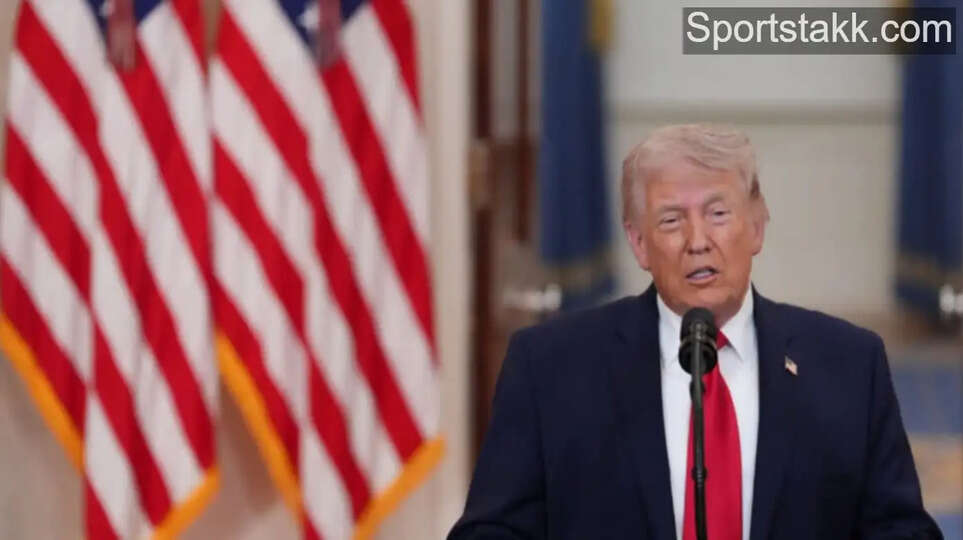
The 39-day conflict between the US and Iran has now reached a ceasefire. Both Washington and Tehran are recording this deal as a "profit" on their balance sheets.
US President Donald Trump is calling it a diplomatic and military victory, as international trade has reopened. However, if this entire situation is analyzed from the perspective of the global economy, the story presents a different picture.
The same war that ousted Iran's top leadership and caused massive damage to its infrastructure has multiplied Iran's bargaining power in the global supply chain and the world oil market. Let's understand in detail how Iran has transformed this geopolitical crisis into a new "revenue model."
Iran will become richer through the Strait of Hormuz
In the global oil market, the Strait of Hormuz is considered the world's most important logistical artery. Approximately 20 percent of the world's crude oil passes through this narrow sea route.
When Iran blocked this route during the war, it had a direct impact on global markets. Crude oil prices surged, severely disrupting global supply chains. In a way,
Iran demonstrated that it held the power to control the global economy. This immense pressure of the energy crisis forced the United States and the international community to come to the table as soon as possible.
Iran's new 'toll tax' model
The biggest and most surprising outcome of this war is Iran's newfound control over the Strait of Hormuz.
What was previously considered a completely free international waterway is now turning into a toll plaza for Iran and Oman.
According to a report in the Economic Times, under the new agreement, commercial ships passing through may now be required to pay toll fees.
Iran has demanded that this fee be determined based on the nature and size of the cargo. This essentially means that Iran has turned a significant portion of maritime trade into a source of permanent revenue.
Iran will use this money to compensate for war damage and rebuild. Furthermore, due to the threat of sea mines, ships must pass through in coordination with the Iranian military, which technically makes Iran the "regulator" of this trade route.
The entire mathematics of logistics cost can change
From a business perspective, the impact of this new "toll tax" at sea won't be limited to shipping companies. Whenever logistics costs increase on a key trade route, it directly impacts commodity prices.
For countries like India, which rely heavily on imports for their energy needs, higher freight costs mean pressure on petrol and diesel prices and, consequently, higher inflation in the domestic market.
Iran holds the key to the global oil market
For the US , this deal is an "operational success," as it has removed the biggest disruption to the global supply chain and restored the flow of oil. But from Iran's perspective, it is a "structural success."
Despite the loss of its Supreme Leader, Ayatollah Ali Khamenei, on the battlefield and the destruction of military bases, Iran has created a business asset that will provide it with future economic strength.
While this ceasefire will bring immediate relief to global markets, in the long term, Iran's new "regulatory control" over the Strait of Hormuz adds a new risk premium to international trade. That is, Iran has hedged its short-term losses with a long-term profitable asset.
Iran
Donald Trump
United States of America